Deep Dive: Why ESP32-S3 + FreeRTOS is the Killer Combination for Industrial IoT
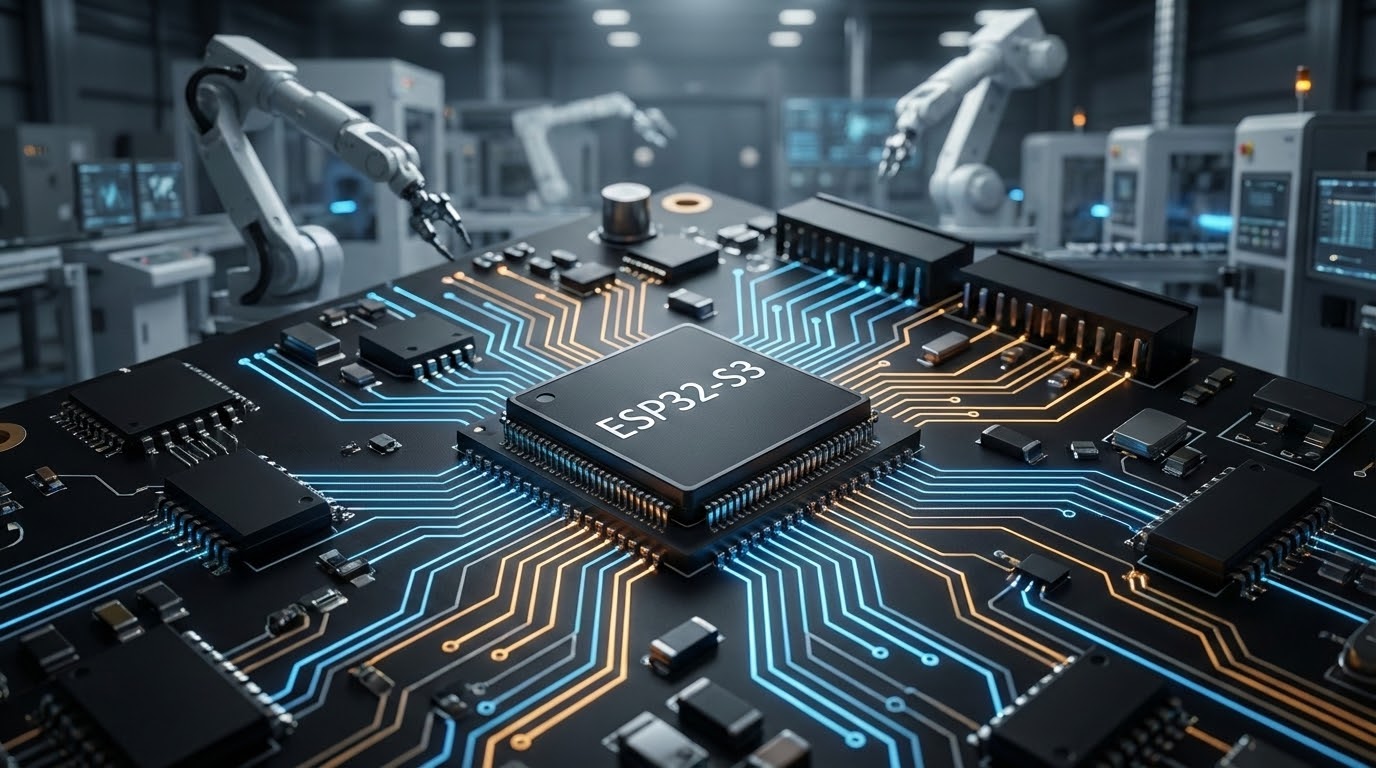
From Hobbyist to Industrial Grade: The Architect’s Perspective
Moving from a hobbyist project to an industrial-grade deployment requires a radical shift in mindset. Stability, security, and real-time responsiveness are no longer “nice-to-haves”—they are mandatory. Based on technical documentation and architectural standards, the combination of ESP32-S3 and FreeRTOS has emerged as the industry’s “Killer Combination.”
1. The Muscle: ESP32-S3 for Edge Intelligence
The ESP32-S3 is purpose-built for AIoT (AI + IoT), distinguishing it from its predecessors:
- Vector Instructions: The Xtensa® LX7 CPU includes vector instructions that significantly accelerate neural network computing and signal processing. This is critical for Industrial Predictive Maintenance, such as performing on-board FFT analysis of motor vibrations before sending data to the cloud.
- High Performance: With a 240 MHz clock speed and support for large external PSRAM, it handles complex industrial logics without latency.
2. The Brain: FreeRTOS SMP (Symmetric Multiprocessing)
In a factory environment, a blocked loop due to network congestion is unacceptable.
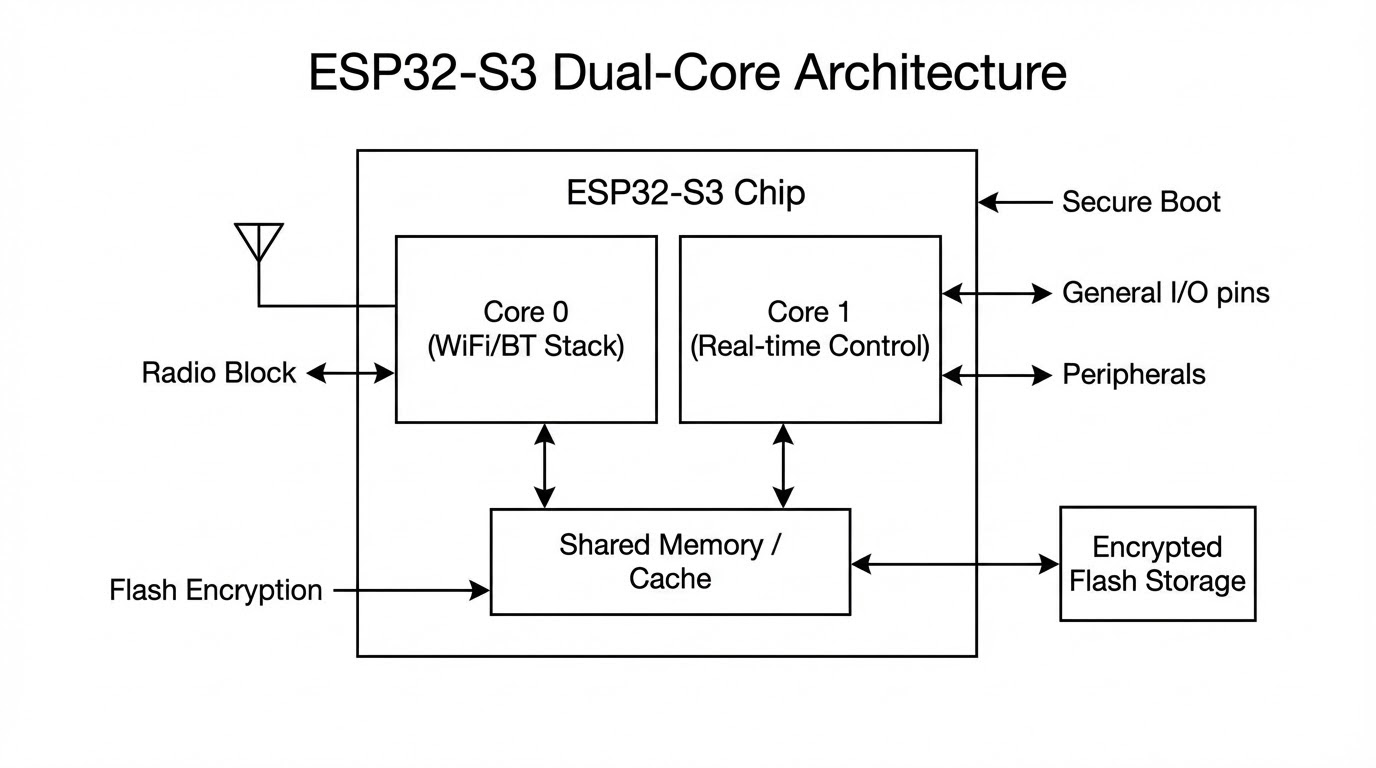
- Core Separation: Using FreeRTOS on the ESP32-S3 allows for true dual-core operation.
- Core 0 (Protocol CPU): Manages heavy lifting like Wi-Fi/Bluetooth stacks.
- Core 1 (Application CPU): Dedicated to your business logic and sensor reading.
- Preemptive Scheduling: Ensures that high-priority tasks, like an Emergency Stop, always preempt lower-priority tasks with deterministic timing.
3. The Shield: Hardware-Level Security
Industrial systems are prime targets for cyber-attacks. The ESP32-S3 provides robust hardware defenses:
- Secure Boot V2: Uses RSA-based signatures to ensure only authorized firmware can run.
- Flash Encryption (XTS-AES-128): Protects code and sensitive data in flash memory using a key hidden in hardware eFuses.
Industrial Capability Analysis Table
| Requirement | ESP32-S3 + FreeRTOS Solution |
|---|---|
| Real-time Determinism | Dual-core task separation via FreeRTOS for precise timing. |
| Connectivity | Integrated TWAI® (CAN Bus 2.0) and Bluetooth 5 (Long Range). |
| Reliability | Built-in Task Watchdog Timer (WDT) to auto-recover hung tasks. |
| Remote Maintenance | Secure OTA updates with signature verification and rollback. |
| Edge Intelligence | Vector instructions for on-site TinyML processing. |
Pro Tips from the Architect
For serious industrial deployments, remember:
- Isolation: Always use Optocouplers or Digital Isolators for PLC/Inverter interfaces to prevent ground loops.
- ADC Accuracy: ESP32’s internal ADC can be non-linear. For metrology-grade measurements, use an External ADC (via SPI) and use the ESP32-S3 as the processing gateway.
Conclusion
The S3 and FreeRTOS stack provides the perfect balance of performance and reliability. By leveraging its dual-core nature and hardware security, you can build systems that don’t just work—they endure.